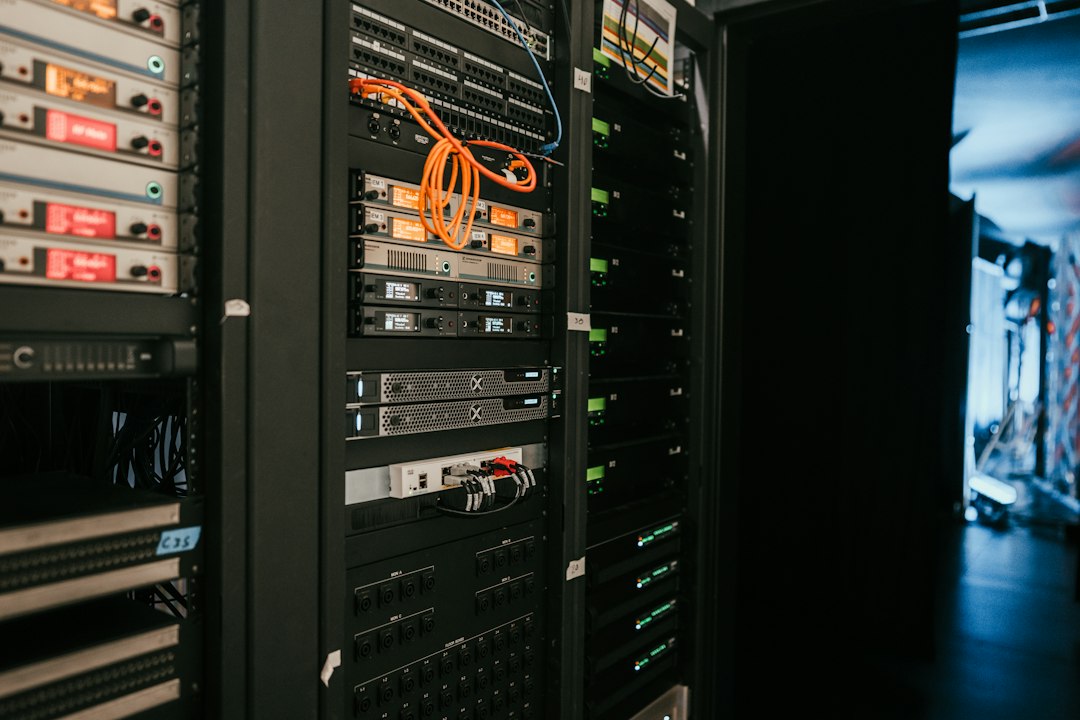
A Power Plant Hack Leads Today’s Tech Brief
There’s a useful theme running through this morning’s news: a lot of technology risk comes down to what we decide to trust, and how much authority we give that trusted thing. A power plant trusts its industrial controls. A messaging plugin gets permission to read conversations. Communities trust that somebody has worked out who pays for the electricity behind a new data center. Windows trusts a Microsoft-signed security driver.
Most of the time, that trust is exactly what makes the technology useful. The trouble starts when the boundary around it is fuzzier than everyone assumed.
A cyberattack reportedly shut down a small UK power plant for four days
Yes, a cyberattack really does appear to have knocked a British power generator offline for four days in July. No, Iran did not “take down the UK power grid,” despite the direction some of the headlines are inevitably going to wander.
Reuters reports that the British government briefed energy-company leaders Monday after reports that hackers allegedly linked to Iran disrupted a small generator. The Financial Times describes it as a roughly 15-megawatt gas-fired “peaker” plant. These are relatively small generators brought online when the grid needs extra power, and many are largely unattended and controlled through programmable logic controllers, or PLCs.
That last part is why I care more about this story than the missing 15 megawatts. A PLC is a small industrial computer that tells physical equipment what to do: open a valve, start a pump, spin a motor, stop a process. Compromise one in the wrong environment and the consequence is not a stolen spreadsheet. Something in the real world can stop moving.
Now for the restraint the story needs. The UK government says the affected generator was small, there was no risk to the wider national grid, and nobody lost power because of this incident. British officials have also not publicly confirmed who carried out the attack. Iran-linked attribution comes from the reporting, not an official finding. That makes the incident less apocalyptic. It doesn’t make it boring.
The UK’s own Energy Sector Cyber Security Strategy, published in May, says Iran-based actors have been seen targeting industrial control systems and warns that parts of the energy system were never designed for today’s level of digital connectivity. That is a much larger problem than any one plant.
If you run operational technology, the homework is familiar because good security is often annoyingly familiar: know what is connected, remove unnecessary internet exposure, segment industrial systems from ordinary office networks, keep remote access tightly controlled, patch what can safely be patched, and monitor for behavior that should not be happening. For everyone else, there is nothing to update on your laptop this morning. Just remember that “cybersecurity” increasingly includes things that make noise when they break.
Technology is rarely just about the technology
Some of the most important technology stories aren’t product launches at all. They’re about health, privacy, education, law, accessibility, work, and what happens when technology reaches ordinary people. Browse more Raymond Tec News for the stories worth understanding without the hype.
ChatGPT can now read and send Apple Messages — if you let it
OpenAI added an Apple Messages plugin to the ChatGPT desktop app for macOS on August 20. On Apple silicon Macs, it can read and search iMessage, SMS, and RCS conversations and prepare or send messages through Apple’s Messages app. It is available across ChatGPT plans, but this particular capability is used through ChatGPT Work and Codex rather than an ordinary ChatGPT conversation.
That sounds invasive until you get to an important detail: it doesn’t simply wake up one morning with access to your texts. You have to install the plugin and grant the necessary macOS permissions.
The more interesting security decision comes after that. By default, ChatGPT asks you to approve the message and recipients before it sends anything. OpenAI also supports persistent approval, and its own release notes specifically point users toward the risks of turning those confirmations off.
I think the default is the right one. The whole reason an AI agent becomes useful is that it can combine context with action. The same thing also makes mistakes more consequential. Reading a conversation, misunderstanding an instruction embedded in it, and drafting something weird is one category of problem. Sending that message without you seeing it first is a different category.
For personal use, I’d leave per-send approval on unless there is a genuinely compelling reason not to. For a business, I’d go one step further: decide whether an AI tool should have access to client, employee, legal, medical, financial, or otherwise confidential conversations before somebody grants the permission because the button was there. Business workspace administrators can disable Apple Messages through the existing Computer Use control.
This is not a reason to panic about ChatGPT reading everybody’s texts. It is a reason to treat messaging access like what it is: a meaningful permission, not a cute convenience.
Turning on AI is the easy part
Deciding what an AI tool should be allowed to see, who should use it, what work it should perform, and what happens when it gets something wrong is the more interesting problem. Raymond Tec helps businesses connect and automate the tools they actually use without treating every new feature like a button that obviously needs to be switched on.
Data centers are becoming a kitchen-table political issue
For years, “the cloud” was a wonderfully convenient metaphor because it let us forget that the cloud is actually warehouses full of computers sitting in somebody’s town, using somebody’s electricity, water, roads, transmission lines, and tax incentives.
Voters are remembering where “somebody’s town” is.
The Associated Press reports that data-center development has become an increasingly ugly issue in 2026 governor and congressional races, with candidates in both parties responding to complaints about electricity prices, water use, noise, pollution, rural land, and tax breaks. Pennsylvania Governor Josh Shapiro tightened the state’s rules last week, removing data centers from a fast-track permitting program, blocking state agencies from signing nondisclosure agreements with developers, and requiring more local and environmental scrutiny.
The electricity part deserves care because it is easy to turn a complicated grid problem into “AI made your bill go up.” Reuters reports that congestion costs on PJM, the regional grid serving about 67 million people from the Mid-Atlantic into the Midwest, rose sharply to $6 billion in the first half of 2026. Data centers are part of rapidly growing demand, especially in northern Virginia, but storms, overloaded transmission lines, operating rules, electric vehicles, heat pumps, generation costs, and years of slow grid expansion are all mixed into the same system.
So, no, I would not look at a higher electric bill and confidently point at one building full of GPUs. But I also would not accept the idea that giant new electrical loads have no public cost simply because the servers are doing something economically useful.
This has moved beyond a niche fight between zoning boards and developers. AI infrastructure is now an electricity, land-use, tax-policy, and local-government story. If a large data-center project is proposed near you, the useful questions are boring ones: how much power and water does it require, who pays for new infrastructure, what tax concessions are being offered, what happens during peak demand, and what does the community get in return?
The rules around technology matter too
Platforms, privacy, speech, competition, surveillance, copyright, and regulation increasingly determine what technology companies can build and what the rest of us have to live with. Browse more Raymond Tec News for practical coverage of technology policy and digital rights.
Microsoft Defender’s own driver can be turned against security software
Check Point Research published a wonderfully nasty piece of Windows research last week involving BTR.sys, Microsoft Defender’s Boot-Time Removal driver. Defender uses it during startup to perform cleanup work before the rest of Windows — and before a lot of security software — is fully running.
Researchers reverse-engineered the driver’s command format and demonstrated that it can be repurposed to perform arbitrary file and registry operations with kernel-level authority. In their proof of concept, that included deleting components needed by Defender and potentially other endpoint-security products before those tools had a chance to start.
The headline version is “Microsoft’s own signed driver can disable antivirus.” True, but incomplete enough to be misleading.
An attacker already needs administrative-level SeLoadDriverPrivilege to abuse this technique. Check Point says it found no evidence of the method being used in real attacks, and Microsoft’s Security Response Center told the researchers the finding does not meet its criteria for immediate servicing because it depends on those pre-existing privileges.
So this is not a drive-by Windows zero-day, and there is no emergency patch I can tell you to install. It is a post-compromise technique: the attacker already has significant control and is looking for a quieter way to keep it.
The useful lesson is about trust. We tend to treat “Microsoft-signed” as synonymous with “safe.” Digital signatures tell us who produced the code and whether it has been altered. They do not tell us whether a legitimate component can be used in a way its designer did not intend. Check Point’s recommendation is therefore behavioral: restrict powerful privileges, and watch for trusted drivers being loaded from processes and contexts where they do not belong.
That is less satisfying than blocking one bad hash. It is also how modern endpoint security increasingly has to work.
Taken together, today’s stories are all versions of the same question: what can this trusted component do, and what happens if somebody stretches that permission farther than intended? That is true for a PLC in a power station, an AI agent in Messages, a data-center developer asking a community to absorb new infrastructure, and a signed Windows driver running before your antivirus wakes up.
The label on the thing matters. The authority behind the label matters more.
Still in a reading mood? The Raymond Tec News archive covers security, AI, small-business technology, policy, and the places technology collides with ordinary life — without requiring a computer-science degree to get through it.
Sources / Further Reading
UK power plant cyberattack
- Reuters: UK briefs energy chiefs after Iran-linked cyber attack reports
- Financial Times: UK energy companies on alert after Iran-linked hackers shut down peaker plant
- UK government: Energy sector cyber security strategy
ChatGPT and Apple Messages
Data centers, electricity, and local policy
- Associated Press: Data centers become a midterm political issue
- Reuters: Pennsylvania imposes new data-center rules
- Reuters: PJM transmission congestion costs surge to $6 billion
Microsoft Defender BTR.sys research
Photo by Wim van ‘t Einde on Unsplash.