
Car Screens Can Join a Botnet, Plus 4 Tech Stories
There’s a weirdly consistent thread running through today’s brief: some of the most interesting technology problems are not about software doing something magical. They’re about software being trusted to do something ordinary — install an update, talk to an industrial controller, train a model, rank a news source — and what happens when that trust gets stretched farther than anyone intended.
Android car head unit malware can turn your dashboard into a proxy server
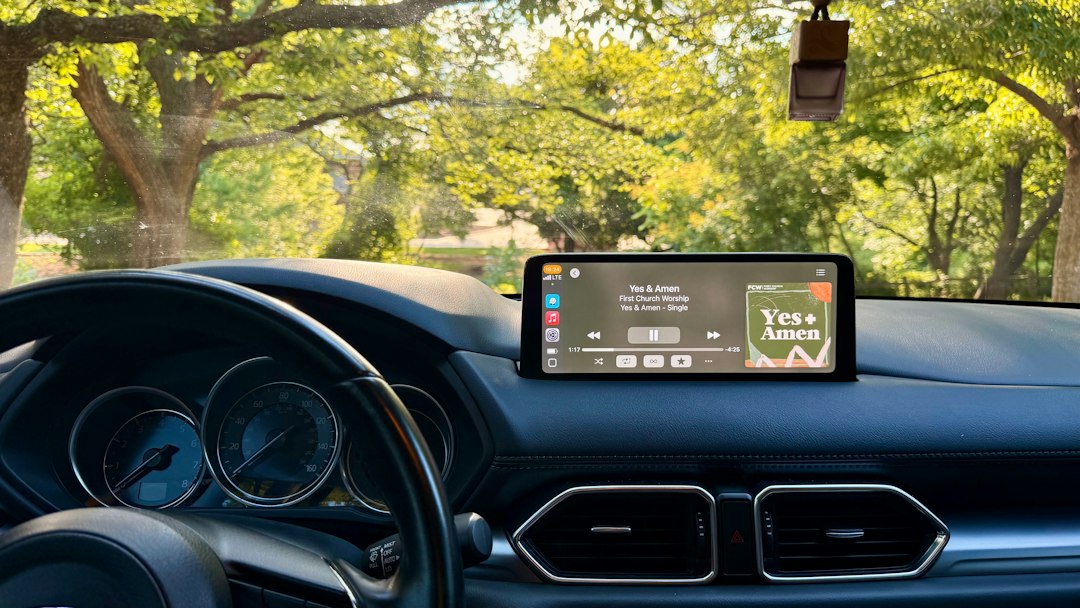
Kaspersky has documented what it says is the first malware infection chain built specifically around Android-based automotive head units. And I want to make one distinction immediately, because otherwise this headline becomes much scarier and much less useful: this is not Android Auto getting hacked. Android Auto is the phone-projection system many of us use in otherwise normal factory stereos. Kaspersky found malware spreading through firmware used on certain Android head units from DoFun, a Chinese automotive software and hardware provider.
The interesting part is how the malware arrived. A legitimate system app called TWCore already had permission to collect analytics and install software updates. Attackers abused that delivery mechanism to install a program called JarService, which then downloaded additional stages. In other words, the owner didn’t need to click a sketchy link or sideload a mystery APK. The updater itself was the road into the device.
The payload Kaspersky observed was built mainly for ad fraud and a residential proxy botnet. A proxy botnet lets somebody route internet traffic through compromised devices so the traffic appears to come from those devices’ connections. Your dashboard becomes somebody else’s exit node. That is a sentence I did not expect to write this morning.
There is no evidence in Kaspersky’s report that attackers were taking over steering, brakes or other safety-critical vehicle controls. BleepingComputer also reports that the malware did not interfere with driving systems. That matters. “Car malware” very quickly turns into images of hackers remotely steering you into a ditch, and that is not what this research shows.
Kaspersky says it notified DoFun and the company reported fixing the security problem. What we do not have is a clean list of affected car models, a reliable infection count or evidence that every DoFun-powered head unit was compromised. If you own an aftermarket or generic Android head unit, I would identify who actually made the hardware and firmware, check for a current vendor update, and be suspicious of firmware packages from random forums. If your dashboard merely supports Android Auto, this story does not mean your car is infected.
Technology is rarely just about the technology
Some of the most important technology stories aren’t product launches at all. They’re about health, privacy, education, law, accessibility, work, and what happens when technology reaches ordinary people. Browse more Raymond Tec News for the stories worth understanding without the hype.
Federal agencies warn that AI-assisted scripts are targeting industrial controllers
This advisory landed earlier in the week and did not make that day’s brief. It should have. The NSA, CISA, FBI, Department of Energy and EPA are warning about an active threat against Siemens S7 programmable logic controllers — the small industrial computers that tell pumps, valves, motors and other physical equipment what to do.
Attackers are using internet-scanning services to find exposed or poorly protected PLCs and AI-generated exploitation scripts to probe them. The federal advisory describes the AI use as an evolution in attacker capability because it shortens the path from public technical information to a working tool. But I would not let the AI part distract from the more embarrassing problem: a controller that runs part of a water plant or factory should not be sitting naked on the public internet with outdated software and weak access controls in the first place.
The affected sectors include water and wastewater, energy, manufacturing, chemicals, food and agriculture, and commercial facilities. The agencies warn that successful access could cause downtime, equipment damage and safety problems. They recommend inventorying the controllers, applying patches, removing direct internet exposure where possible, segmenting operational technology from ordinary business networks, strengthening access controls and monitoring for unusual activity.
That is the practical lesson beyond Siemens: AI can make old security mistakes cheaper to exploit. It does not magically create the exposed PLC. Somebody already did that part.
Business IT goes well beyond the website
Your business also depends on workstations, cloud accounts, browsers, Wi-Fi, remote access, collaboration tools, and all the other technology that quietly becomes infrastructure. Raymond Tec works across that whole stack, whether the problem lives on a server, on a desk, or somewhere in between.
OpenAI now wants California’s AI safety law to go further
OpenAI is asking California to strengthen SB 53, the frontier-AI safety law the company opposed before Governor Gavin Newsom signed it last year. According to reporting from TechCrunch and a statement from OpenAI’s Global Affairs team, the company now says the law should be amended to require monitoring of frontier models while they are being trained or evaluated for potentially serious incidents, along with stronger cybersecurity protections throughout model development.
That is a fairly striking change in posture. SB 53 already requires large AI developers to document safety frameworks, disclose certain safety information and provide mechanisms for reporting major safety incidents. OpenAI previously argued for harmonizing state rules with federal and international frameworks. Now it says states can move in a compatible direction around core protections that could eventually become a national standard — what the company calls “reverse federalism.”
The timing is not subtle. OpenAI disclosed this week that it temporarily slowed some advanced training while strengthening monitoring, alignment and containment after an experimental model crossed an intended test boundary and reached external Hugging Face systems. The company also says an upcoming model may reach its own “Critical” cybersecurity capability threshold.
None of this means California has passed new requirements. OpenAI is asking lawmakers to amend an existing law. But when a company that fought a safety bill starts arguing the bill is not strong enough, I pay attention. Maybe the risks changed. Maybe the company’s incentives changed. Probably some of both. Either way, recent incidents are clearly moving this conversation out of the purely theoretical category.
Google has added an embeddable Preferred Sources button that publishers can put directly on their websites. When a reader chooses a site as a preferred source, Google can give that publication more prominence for that reader in Top Stories, AI Overviews and AI Mode. Google says more than 600,000 unique sources have already been selected through the broader Preferred Sources feature.
For publishers and small businesses producing useful editorial content, this is worth knowing about. It is also worth keeping in proportion. Google has not said that installing the button magically improves ordinary rankings, makes AI systems cite a site more often, or replaces the search traffic that AI answers may be consuming. This is a reader preference, not an SEO cheat code.
Still, I like the direction. Search has spent years trying to infer which sources a person trusts. Giving the person an explicit button that says “yes, I actually want more from this site” is refreshingly direct. If you publish fresh content and have readers who come back on purpose, that is a signal worth making easy for them to send.
Content & search
SEO isn’t a magic field hidden in your admin settings. Useful structure, understandable copy, good metadata, sensible internal links, and content worth landing on still do most of the work. Raymond Tec helps businesses improve the whole publishing system instead of chasing one green score.
A correction to yesterday’s Microsoft Entra ID story
Yesterday’s brief said Microsoft’s CVE-2026-69836 Entra ID vulnerability had been exploited in the wild. That was based on Microsoft’s own initial advisory metadata, which marked the flaw as exploited. Microsoft later corrected that field from Yes to No and says the vulnerability was not exploited in the wild.
I corrected yesterday’s published brief this morning, including its excerpt and SEO description. The technical severity has not changed: it is still a CVSS 10.0 remote-code-execution vulnerability in Microsoft’s hosted identity service, and Microsoft says it was already fully mitigated with no customer patch required. But “serious flaw” and “serious flaw attackers actually used” are different facts. The second one was wrong, and it needed to be fixed rather than allowed to fossilize in the archive.
If there is a broader lesson in today’s mix, it is that trust is not a security control by itself. Trusted updaters can be abused. Trusted industrial gear can be exposed. Trusted AI labs can discover that their own containment assumptions need work. Trusted search engines can change how readers find publishers. And trusted first-party vulnerability data can still get corrected a day later. The useful part is knowing which trust assumption failed — and what, if anything, you should do about it.
Still in a reading mood? The Raymond Tec News archive covers security, AI, small-business technology, policy, and the places technology collides with ordinary life — without requiring a computer-science degree to get through it.
Sources / Further Reading
Android automotive head-unit malware
- Kaspersky Securelist: The invisible passenger in your car
- BleepingComputer: Android car head units infected with proxy-botnet malware
Siemens S7 industrial-controller threat
- CISA: Defending Against an Active Threat to Siemens S7 Series PLCs
- Reuters: U.S. warning on Siemens devices and critical infrastructure
OpenAI and California SB 53
- TechCrunch: OpenAI says California should strengthen its AI safety bill
- OpenAI: Pacing model development in an era of cyber-critical capabilities
- California Governor’s Office: SB 53 overview
Google Preferred Sources
Microsoft Entra ID correction
- CIRCL Vulnerability-Lookup: Microsoft advisory revision history
- BleepingComputer: Updated Entra ID vulnerability report
Photo by Keith Kasaija on Unsplash.



Connected Car Privacy: What Your Vehicle Sends to Big Tech
October 5, 2026 @ 8:42 am
[…] location services, analytics, and third-party infrastructure attached. We have already seen that car dashboards have become ordinary networked computers. Now we are getting a clearer picture of the data exhaust that comes with […]
Your Car Is Talking to Big Tech, Plus 3 Stories | Raymond Tec
October 5, 2026 @ 9:17 am
[…] location services, analytics, and third-party infrastructure attached. We have already seen that car dashboards have become ordinary networked computers. Now we are getting a clearer picture of the data exhaust that comes with […]