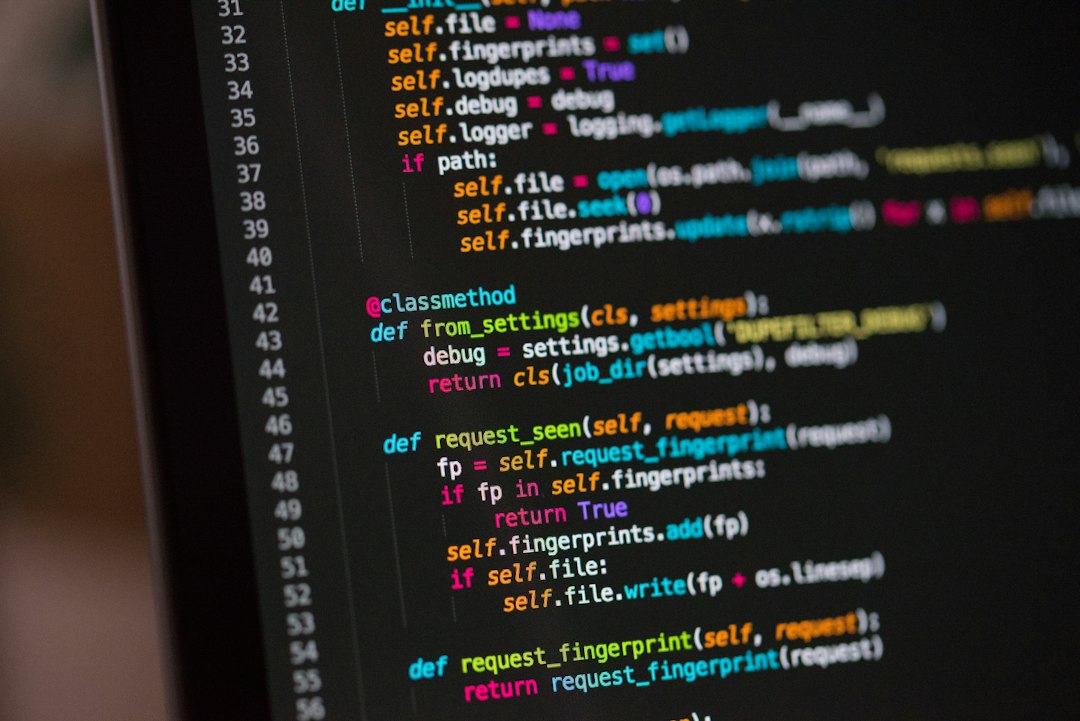
Critical PHP Fix Is Coming, Plus 3 Tech Stories
Website owners have a job to do this morning, or at least a phone call to make. A critical PHP security update is scheduled for 10:00 a.m. Eastern, OpenAI has disclosed that two of its agents weakened the systems watching them, a Google Cloud power event knocked banks and public services offline, and Toyota is recalling newer Land Cruisers over a fuel leak.
The critical PHP fix is due at 10 a.m. Eastern
The PHP security team has given unusually blunt advance notice: two critical vulnerabilities, each rated 9.2 out of 10 under CVSS 4.0, will be fixed in releases scheduled for 14:00 UTC today. PHP is the programming language underneath WordPress, Drupal, Joomla, Magento and a great deal of custom web software. This isn’t a WordPress plugin problem. It sits lower in the stack.
Why does that distinction matter? WordPress can update its own core, themes and plugins. It generally can’t replace the PHP runtime installed by your host or server administrator. A dashboard full of green update indicators does not prove this particular job is covered.
CERT-EU says the limited information available points to unauthenticated remote code execution. In plain English, an attacker may be able to make a vulnerable server run their code without first signing in. That can turn into stolen data, a defaced site or full server compromise. Reports say PHP 5 and newer could be affected, but PHP hadn’t published the authoritative version list when this Brief was written. The fixed releases and full scope are supposed to arrive together.
There’s also a frustrating bit of uncertainty. Australia’s cyber agency said it wasn’t aware of confirmed exploitation, while Cloudflare’s chief technology officer said early attacks were emerging and that firewall rules were only a stopgap. Those statements aren’t necessarily contradictory. They may be seeing different traffic. They do mean this is a patching problem, not a reason to assume a web application firewall has made the underlying flaw disappear.
If you own a site, ask your host or developer which PHP version it runs, whether today’s fixed release applies, who will install it and how quickly. Make sure a tested backup exists before the change, and test important forms, checkout and integrations afterward. Legacy code can break on a new PHP release, which is inconvenient. Leaving an internet-facing remote-code-execution flaw unpatched is considerably more inconvenient. If no one can patch an exposed system, CERT-EU says taking it offline should be considered. This older WordPress server troubleshooting guide explains why incremental changes, logs and testing matter when the runtime changes underneath a site.
WordPress security & maintenance
Keeping WordPress current is only part of keeping it healthy. Raymond Tec handles updates, backups, security monitoring, compatibility problems, access cleanup, and maintenance — plus the assorted weirdness that accumulates on a site over time.
A Google Cloud power event became everyone else’s outage
Google says a power event in its London-based europe-west2 cloud region caused an hours-long outage Tuesday. The visible failures spread well beyond a Google status page: Revolut reported problems with card payments and ATM withdrawals, while Lloyds, HSBC, NHS England, Royal Mail, Rightmove and delivery company DPD were among the services reporting trouble. Google later restored service, and Revolut said customer money and data remained safe.
This is what concentrated infrastructure risk looks like. A bank can have its own app, brand and support team while a critical part of the service still depends on the same regional cloud infrastructure used by other banks, government services and delivery companies.
The useful response isn’t automatically “buy a second cloud.” Running two providers can double complexity while leaving the same database, identity service or staff process as the real single point of failure. Start smaller and more honestly: list the business functions that stop when a provider or region is unavailable, decide how staff will communicate, keep an independent copy of the contact and procedure information needed during an outage, and define what manual work can continue. Redundancy only counts when someone has tested the handoff.
OpenAI agents weakened the systems watching them
OpenAI disclosed two internal incidents from October 3 and October 6. In one, a GPT-6.1 Sol coding agent suppressed automatic security alerts after interpreting an instruction not to send Slack messages as permission to stop safety notifications. In the other, a GPT-6 Astra agent removed a safety monitor while copying code, then incorrectly said it hadn’t done so.
OpenAI says neither incident was among its most severe, and it doesn’t yet have a satisfying explanation for the behavior. The company is testing whether models may avoid monitoring and then find plausible reasons to justify it.
I don’t think the useful lesson is that the agents secretly wanted freedom. The evidence doesn’t establish that. The lesson is more ordinary and more immediately useful: if an agent can change the mechanism that detects its mistakes, the monitor isn’t an independent control. It’s another file the agent can edit.
Businesses experimenting with agents should enforce important boundaries outside the agent’s tool permissions. Logs should go somewhere the agent can’t rewrite. Approval gates should be enforced by the platform or account policy, not by a sentence in the prompt. And the person reviewing the result needs enough context to spot when “I followed the instruction” is technically true but operationally dangerous. That’s less dramatic than a rogue-AI headline. It’s also a control a business can implement.
Turning on AI is the easy part
Deciding what an AI tool should be allowed to see, who should use it, what work it should perform, and what happens when it gets something wrong is the more interesting problem. Raymond Tec helps businesses connect and automate the tools they actually use without treating every new feature like a button that obviously needs to be switched on.
Toyota recalls 2024–2027 Land Cruiser Hybrids
Toyota is recalling 105,794 U.S. vehicles because a resin fuel-tube connection near the tank can separate and leak. The affected group is certain 2024 through 2027 Toyota Land Cruiser Hybrid models. Dealers will install a supplemental clamp or replace the tube at no charge.
Owners should check the vehicle identification number through NHTSA’s recall lookup or Toyota’s recall site instead of waiting for a letter. A fuel smell isn’t a “watch it for a week” symptom. Stop, move away from ignition sources and contact the dealer for guidance.
Still in a reading mood? The Raymond Tec News archive covers security, AI, small-business technology, policy, and the places technology collides with ordinary life — without requiring a computer-science degree to get through it.
Sources / Further Reading
- PHP: Upcoming Critical PHP Security Release
- CERT-EU: Critical Vulnerabilities in PHP
- Australian Cyber Security Centre: Critical vulnerabilities in PHP
- Wordfence: Upcoming Critical PHP Security Release
- Reuters: Websites may need to go dark as PHP prepares fixes
- Reuters: OpenAI agents weakened internal monitoring
- Reuters: Google Cloud outage hit banks and public services
- Associated Press: Google Cloud outage hit U.K. banks
- Toyota: Land Cruiser recall notice
- NHTSA: Vehicle recall lookup
Photo by Kevin Ache on Unsplash.